In the 1980s and 90s the wine boom was driven primarily by two varietals: cabernet sauvignon and chardonnay. Retail stores would often carry other varietals, but restaurants focused on cabernet and chardonnay. McCullough insisted that placements on restaurant wine lists were the key to success. Having your wine on a wine list gave your wine that verifiable third party endorsement guaranteeing the wine was good and worthy of the customer’s attention. The problem was that almost every winery in California was fighting to place their cabernet and chardonnay on those lists. The competition was intense, and if you got your wine placed, it would appear among a lengthy list of wineries.
McCullough reasoned that if we could place alternative red and white wines on restaurant wine lists, there would be less competition, and our wines would stand out. The poster series had taught people, especially waiters and wine salespeople, to pronounce our winery’s name. We figured if we could get wines on wine lists, waiters would happily sell them. We opted to focus on merlot as our red wine.
Merlot was an easy drinking red wine, more easily accessible than cabernet because it had less tannin. Most merlot producers blended cabernet into their merlot just to add some tannic backbone. Rhinefarm merlot was unique, because it had plenty of tannin, which gave the wine added weight and a long finish. Instead of blending with cabernet sauvignon, we’d mix different blocks of grapes from within the Rhinefarm to achieve more complexity while still producing a wine that was 100 percent merlot.
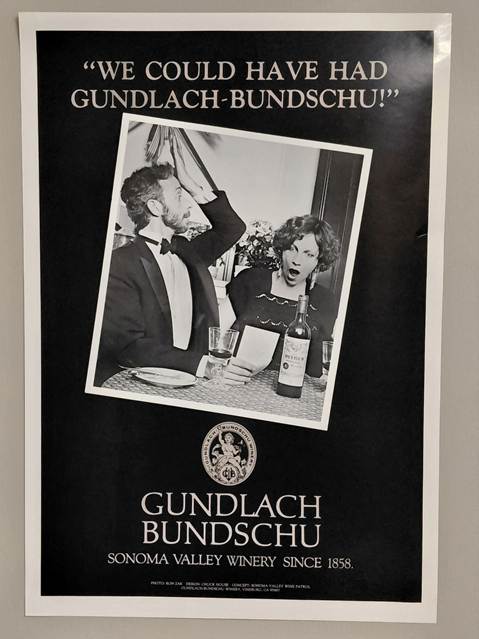
We needed a poster to launch our assault for space on restaurant wine lists. We decided to feature Chateau Petrus, arguably the most famous merlot in the world. An elegantly dressed couple has just been presented with the bill at the end of their meal. They are shocked at the price. “We could have had Gundlach Bundschu!” The poster aligned our wine with the finest merlot in the world and then emphasized that it was a bargain for similar quality.
James Patrick plays the gentleman. James wanted to learn about winemaking and would often come to the winery to help me with late night press loads. Kristin Anneker is his date. Kristin had dreams of making costumes for Hollywood movies. She created and produced the black velvet capes we all wore when we hijacked the Napa Valley Wine Train, and she ended up in Hollywood working as a successful costume designer for years.
Gundlach Bundschu Merlot found its way onto hundreds of wine lists. Often, the only other merlot offered on the list was from Duckhorn Vineyards, and the two of us became recognized as the two finest producers of merlot in California.
The merlot assault for space on wine lists was a tremendous success. We needed a white wine as well. Gundlach Bundschu was one of the few wineries to produce gewürztraminer, and most of the other producers made their wine sweet. Ours was bone dry, which made it a worthy compliment to all kinds of food. gewürztraminer is a strange grape to grow. The clusters tend to bunch up around the center of the vine making it hard to harvest. As the grapes ripen, the skins turn pink, and all at once (around 21 to 22° Brix) the acid drops out of the grapes overnight. We’d pick at those low sugars (something no one else was doing in those days) to retain what acidity we could. The resulting wine was clean and crisp with sparkling aromas of lychee and spice.
Maybe we were a bit cocky and overconfident, but we were on a roll. We decided to make gewürztraminer our white wine entrée to restaurant wine lists. We reprinted more of the Sobriety Test posters and took them with us when we called upon restaurant buyers. Our restaurant calls were unusual to say the least. We’d walk in with our local sales rep, get introduced to the wine buyer and bring out our bottles of merlot and gewürztraminer. Since almost every other wine rep was trying to place cabernet and chardonnay, we stood out from the crowd immediately.
We’d taste the wines and buyers would immediately relate to the quality of the merlot, but they’d also be stunned by the versatility of our dry gewürztraminer. When possible, I’d have them bring something from their menu and have them taste it paired with the gewürtz. The smoked soft shell crab at Christian’s Restaurant in New Orleans was the perfect pairing, so much so that at least four restaurant reviewers mentioned the pairing when writing about the restaurant.
It was an amazing thing to be sitting in a restaurant and hear a table burst into laughter when the waiter told them, “If you can’t say Gundlach Bundschu Gewürztraminer, you shouldn’t be driving.” In New Orleans, we hosted our first Waitstaff Ball on a Thursday night. The free event, exclusively for waiters, started at 10 PM, after dinner service. We had chefs from around town cook food, Charmaine Neville’s Band played, Gundlach Bundschu wines were served, and 300 waiters attended. The Waitstaff Ball ignited sales of Gundlach Bundschu in New Orleans. Mr. B’s restaurant sold three cases of Gewürztraminer the following weekend alone. Our sales soared from a respectable 1,000 cases a year to 3,000 cases per year, and they stayed there for seven years.
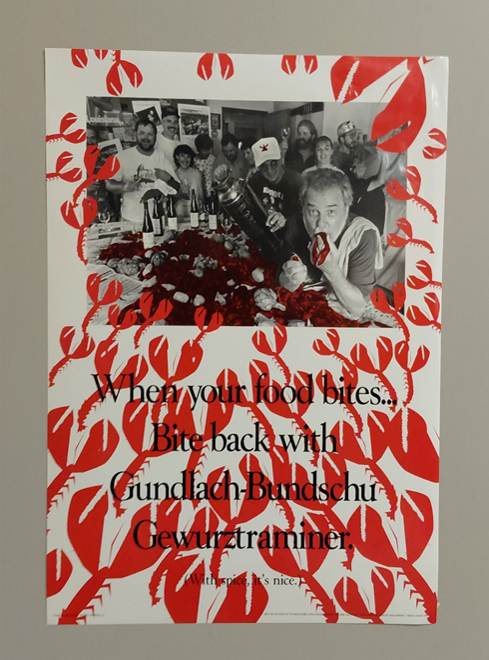
As a reward for our success with gewürztraminer on restaurant wine lists and to thank our New Orleans friends for their unwavering support, we created a second poster for gewürtz. We show our New Orleans friends at a crawfish boil, “When your food bites . . . Bite Back.” The scene is in Jerry and Catherine Henry’s garage. Depicted guests include family members, restaurant owners, and even two wine salesmen from a rival company. Chuck House came up with the idea of adding crawfish he had drawn all over the poster and using red for some color emphasis, making this unique among the entire poster series.
Once we had a foothold on restaurant wine lists with our merlot and gewürztraminer, and restaurant customers were buying the wines consistently, it became much easier to get those restaurants to add our other wines to their list. Gundlach Bundschu became synonymous with excellent, good value Merlot. Our merlot was so popular that we had to put it on allocation to protect our wine list placements.
We wanted to bring another red wine to the game. Cabernet franc was one of the newer plantings on Rhinefarm. I had hoped it would add some complexity to our cabernet sauvignon while taming the tannins. Instead, we found we had a very tannic cabernet franc. Still wary of entering the overly competitive cabernet sauvignon fray, we went with cab franc. The firm tannic backbone provided by the soils of Rhinefarm, made Gundlach Bundschu Cabernet Franc a delicious alternative.
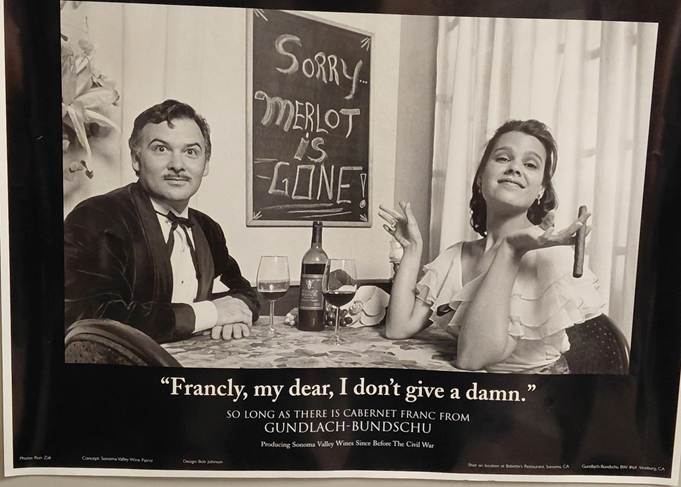
A waiter and waitress from the extremely popular Piatti’s restaurant in Sonoma agreed to be our models. Poking fun at our precarious merlot supply, we riffed off a Gone with the Wind line, “Francly, my dear, I don’t give a damn.” Unique to this poster is the newly revamped Gundlach Bundschu label adorning the bottle. McCullough and I loved this new label, but the Bundschu family decided to return to the more staid old format.

I love this series! There is some marketing genius here! It’s really fun to hear how it all happened. Thank you. Love the posters!
Great strategy to get on wine lists! The posters are an amazing run of successful prompts for attention to your brand and specific varietals. The New Orleans Waiters’ Ball must have been a memorable night.
So fun to see the Henry’s crawfish boil, and get all the energy out of the red crawfish… Your clever Cab Franc poster is great as well.