The Mural: Starting the Process
I had developed a slide show that I took with me on the road as a way to explain how wine was made and what made Gundlach Bundschu so special a place. That slide show showed everything from planting a vineyard to harvest, crushing, and pressing grapes to barrel aging and bottling. I showed the actual people doing the work, and the parties we held to celebrate. Ray and Eduardo studied that slide show for days. They took images from those slides, made drawings, created a mystical section, and pieced it all together for the mural’s subject matter.
Creating a mural painting that is eight feet tall and 120 feet long requires planning, and a drawing called a “cartoon,” (from the Italian cartone.) The cartoon is drawn to scale to ensure correct proportions and exact composition. Since our mural would be 8 x 120 feet, Ray and Eduardo created an 8 x 120 inch cartoon. They even painted it so we could envision the colorful finished product.
Ray and Eduardo began the official work on the mural on September 16, 1989. A tremendously symbolic date in Mexican history, September 16 marks the start of Mexico’s war of independence against the Spanish. It took 11 years of hard fighting, but Mexico finally earned status as a sovereign nation, independent from Spain. September 16th is celebrated as Mexico’s official Independence Day. They came to the winery that day where we cooked a simple meal and waited for it to get dark. Once darkness fell, they brought out an overhead projector and placed sections of the cartoon on it. The images were reflected onto the wall, and they used chalk pencils to outline those images. The outlined figures would get painted, using a special layering technique that brought depth and energy to the mural.
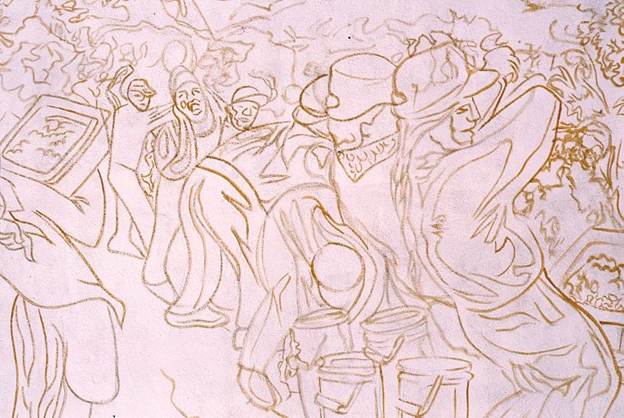
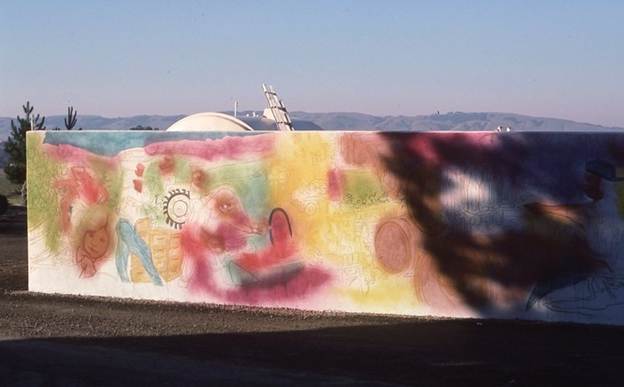
The outlined figures were not terribly detailed, but they filled out the entire mural before they started adding any color. Beginning the painting process was strange. In some places they would paint a section a single color.
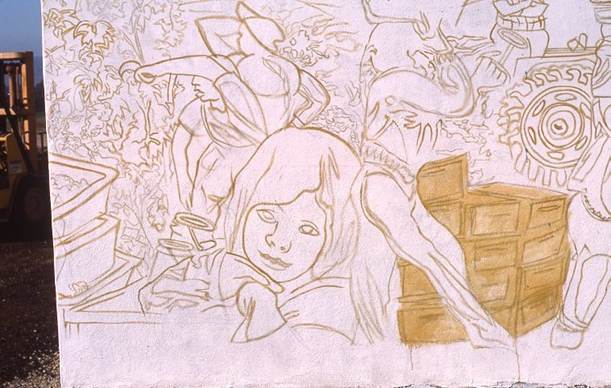
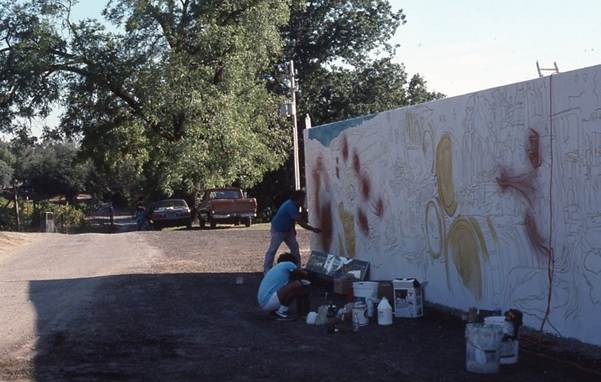
In other sections they would slather on assorted colors or even spray paint entire areas. This initial layering served as a kind of color code instead of actual painting. For example, all the faces received a smear of brown, all the grapevines a splatter of green. The mural was slowly getting colored, but frankly it looked like a mess.
Ray and Eduardo came up to Sonoma almost every weekend. I would make a point of being present whenever they were working. I made sure there was beer, wine, and food. When they had finished work for the day, I’d bring them back to my house for dinner or take them on tours of Sonoma. They also started exploring on their own. They discovered Angelo’s beef jerky shop and stopped to buy beef jerky every time they came.
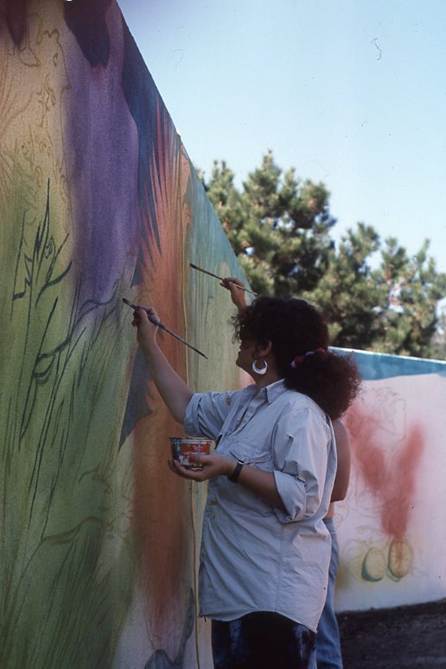
Soon we discovered that painting a mural was a communal endeavor. Dozens of people participated in the painting of the mural. Each weekend they invited friends up to help with the mural and get introduced to Gundlach Bundschu wines. I did the best I could to show them around, explain the winemaking process, and let them taste wine from tanks or barrels. Many of the volunteer artists became regular visitors, and I’d see them from week to week. It was great to see how Ray and Eduardo adopted Gundlach Bundschu as their domain and how proudly they introduced the place and the wines to their friends.
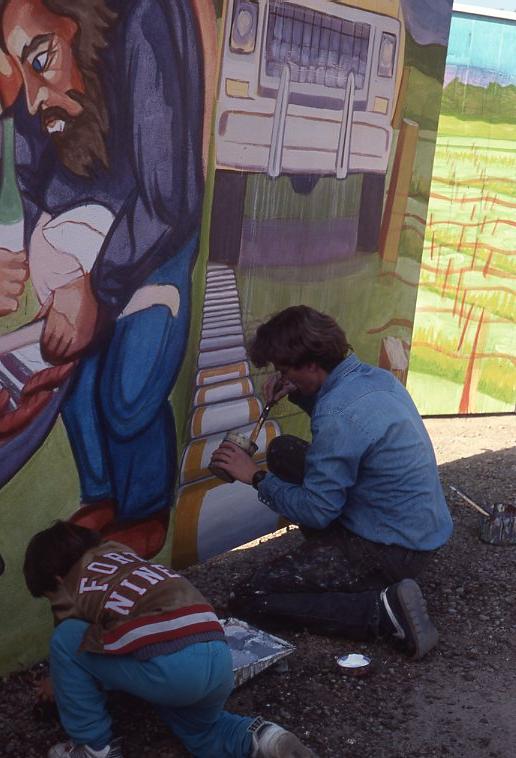
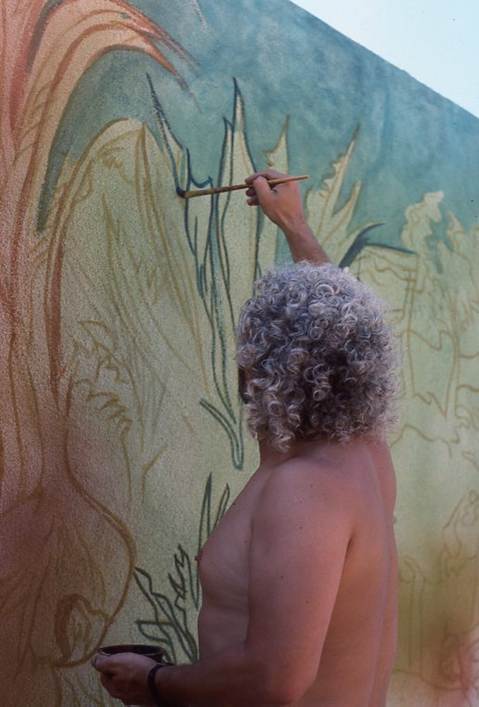
As I met more and more of their friends, I started receiving invitations to events in San Francisco. Ray Patlan worked as Director of Creativity Explored, an art school for challenged artists. I visited several times and genuinely enjoyed the exposition when they opened their gallery to the public. Eduardo Pineda was the curator for Galeria de la Raza, which exhibited a wide variety of politically inspired art produced by local artists. I was introduced to almost every artist working on any murals in the Mission District, ended up in a wide variety of restaurants in the neighborhood, and spent nights with them in small clubs listening to music. They introduced me to José Cuèllar, who was an anthropologist, professor, and musician, also known as Dr. Loco with his Rockin’ Jalapeño Band. We became so close that for a few years they acted as the house band at Gundlach Bundschu events.
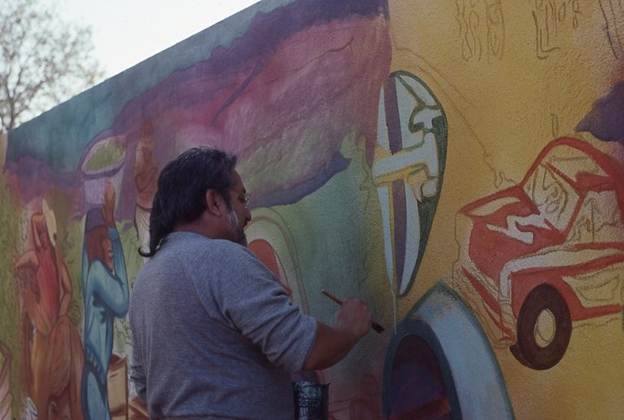
Ray Patlan working on the mural.
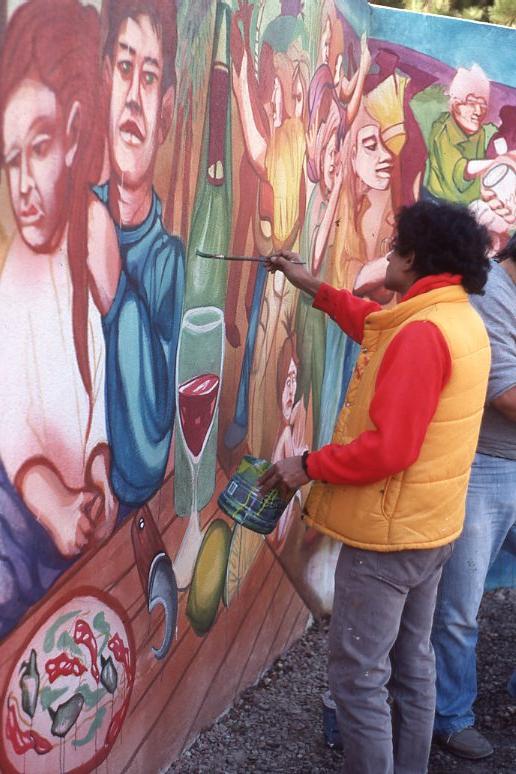
Eduardo Pineda working on the mural.

As Oliver said, “Please sir, I want some more!”